


Electronics firm Sony is to shed 10,000 jobs as part of a major reorganisation, chief executive Kazuo Hirai has said.
The cuts, which represent 6% of the global workforce, will be made over the next 12 months.
The reduction includes staff working in businesses that are being sold, such as its chemicals division.
Sony has been struggling to compete in the television business with South Korea's Samsung and LG, while Apple has challenged it in audio gear and phones.
On Tuesday, Sony forecast a record annual loss of $6.4bn (£4bn), double its previous estimate. Its share price has fallen 40% over the past 12 months.
Entrepreneurial spirit
Sony says it will focus its business on three areas - digital imaging, games consoles and mobile devices.
It hopes the changes will help to generate sales of $10.5bn by the financial year ending in March 2015, with a profit margin of 5%.
In the last financial year, Sony reported sales of $7.9bn.
"We have heard a multitude of investor voices calling for change. Sony will change," Mr Hirai - who took over as chief executive earlier this month - said at a press conference.
"Sony has always been an entrepreneurial company. That spirit has not changed," he said.
The reorganisation will cost Sony $926m (£581m) during the current financial year.
But analysts have been underwhelmed by Mr Hirai's announcement.
"I for one was expecting more," said Pelham Smithers, who runs his own consultancy specialising in the electronics industry.
Continue reading the main story
Sony Corp
Last Updated at 17 Apr 2012, 20:57 Sony Corp twelve month chart
price change %
17.50 -
-0.01
-
-0.06
"This presentation has the same feel as a presentation made three to four years ago when the previous chief executive, Howard Stringer, tried to restructure."
"But back then Samsung and Apple were not as powerful as they are today," he said.
Toshiyuki Kanayama, senior market analyst at Monex, said: "I don't see anything new here. They've talked before about bringing the TV business back to profits. The comments about the electronics business are the same."
"Nothing has changed from what they've flagged in the past, including the M&A plans in the medical field," he said.
Sony's television business has lost money for the past eight years. Analysts say that while it sells about 20 million TV sets a year, it is still not big enough to be profitable.
To tackle that problem Sony is planning to cut costs in the business by 60% by March 2014.
"If they're planning to cut fixed costs by 60%, that signifies the closure of one factory, and the business can shrink. That's not necessarily a bad thing," said Kikuchi Makoto, chief executive at Myojo Asset Management.
"The problem is that the plan is lacking in specifics on the plus side."
The BBC's Tokyo Correspondent, Roland Buerk, said: "Mr Hirai wants Sony to find a new path by creating products that are really going to wow people."
"But saying that is one thing, doing it is another."
Rival Japanese TV maker Sharp is also forecasting hefty losses. It expects an annual loss of $4.7bn this year.
http://www.bbc.co.uk/news/business-17686681

Apple has said it is developing a tool to "detect and remove" a Trojan that is said to have infected more than half a million Mac computers.
It said it is working with internet service providers (ISPs) to disrupt the command network being used by hackers to exploit the malware.
Trojans are infections that can expose computers to control by hackers.
It is Apple's first statement on the threat. It issued patches to prevent the malware's installation last week.
The two security updates were released eight weeks after Java's developer Oracle issued a fix for other computer systems.
In a message posted on Apple's website's support section, the company said it had fixed a "Java security flaw for systems running OS X v10.7 and Mac OS X v10.6".
It suggested users of Macs running earlier versions of its system software should disable Java in their web browser preferences.
In addition, Apple said it was working with ISPs to shut down networks of servers hosted by the malware authors, which the code - known as Flashback - relies on "to perform many of its critical functions".
Macs 'being targeted'
Russian anti-virus firm Dr Web, which has tracked the scale of the botnet, said it believed around 650,000 machines had now been infected.
The company's chief executive, Boris Sharov, told the BBC that since the Trojan was publicised, they have seen downloads of their anti-virus software increase by 28,000%.
"The thing that we have proven to the community is that people should care about their security, even on Macs," he said.
According to a timeline of events posted on its website, Dr Web said activity surrounding the virus began as far back as February.
Traditionally, Apple has promoted the fact that its Macintosh line is largely free from viruses and other similar threats due to the fact almost all malicious software is designed to exploit computers running on Microsoft Windows.
McAfee Labs' Dave Marcus told the AFP news agency: "All the stuff the bad guys have learned for doing attacks in the PC world is now starting to transition to the Mac world."
"Mac has said for a long time that they are not vulnerable to PC malware, which is true: they are vulnerable to Mac malware."
The security firm F-Secure has posted detailed instructions about how to confirm if a machine is infected and how to manually remove the Trojan.
http://www.bbc.co.uk/news/technology-17675314

The number of personal computers shipped worldwide rose more than expected in the first quarter, but the bump did little to mask the larger challenges for the industry.
Gartner Inc. said Wednesday that there were 89 million PCs shipped in the first three months of the year, an increase of 1.9 percent from a year earlier. That's above the research firm's earlier expectations of 1.2 percent.
Another research group, IDC, also announced Wednesday that shipments were up 2.3 percent, above its expectations of a 0.9 percent decline.
The reports may have beat expectations, but confirmed that the PC industry is in a state of flux.
Personal computers have taken a backseat to tablet computers such as the iPad in the U.S. and other industrialized nations. But Gartner found that PCs also are falling short of expectations in other markets worldwide, including China and India, where computer ownership is low.
Gartner says the quarter serves as a warning to the industry that PC makers cannot rely heavily on growth in these regions.
PC vendors typically see a lull in sales during the first quarter following the holiday season. But Gartner's results reveal worse-than-normal shipment growth as consumers and some businesses are opting instead for smaller, sleeker devices.
The industry was also dealing with a shortage of hard drives, which had a limited impact on the period.
Gartner said that PC shipments declined 3.5 percent in the U.S., which is better than the 6.1 percent decline it anticipated. Shipments to Asia rose 2 percent, weighed down by weak demand in India and China. Shipments to Latin American declined 3.2 percent.
Shipments to Japan rose 11.5 percent and those to the larger Europe and Middle East region increased 6.7 percent.
IDC found similar global trends but was slightly more optimistic on the industry's future.
"History has shown that periods of slower growth are followed by recovery as improving technologies make replacements as well as new purchases increasingly compelling," Loren Loverde, IDC's vice president of worldwide consumer device trackers, said in a statement. "As a result, we expect PC shipments to pick up significantly by the fourth quarter."
Hewlett-Packard Co. and Lenovo Group Ltd. were the standouts during the period, according to both firms.
Gartner found that Hewlett-Packard strengthened its position as the market leader, accounting for 17.2 percent of the world's shipments during the quarter. No. 2 Lenovo was a strong performer as well, increasing its shipments by 28.1 percent. It has a market share of 13.1 percent.
Dell Inc., Acer Group and AsusTek Computer Inc. rounded out the Top 5
http://abcnews.go.com/Technology/wireStory/pc-shipments-percent-1st-quarter-16119787#.T4YRfplYurU

TomTom has blamed a "leap year bug" for a fault causing some of its satellite navigation devices to malfunction.
The firm said that a problem with its global positioning system firmware - code embedded into the devices - was causing "a limited number of models" to fail to identify their location.
Affected users are presented with a grey screen and a message saying the machine lacks a GPS signal.
The firm said that it was working on a fix and promised further updates.
The Dutch company said that the issue first emerged on 31 March.
It suggested that customers should reset their devices by holding the on/off button down for 20 seconds, saying the move acted as a temporary fix.
TomTom told the BBC that it would "update customers on which models are affected as soon as we know more".
Frustration
The problem appears to affect devices worldwide, with users in the UK, Australia, Switzerland and Denmark among those complaining of the problem.
One user of the firm's Go Live 1005 model told the BBC that he had encountered the problem on Sunday during a trip from Gatwick Airport to Cornwall.
"It refused to shift its position from Gatwick and kept showing a message saying 'looking for valid GPS signals,'" Graham Pitt said.
"I assumed it had broken but when I went to check TomTom's website I saw there were similar complaints about a range of models on its discussion boards. I feel this should have been made public earlier to alert customers to the problem."
A thread titled "No GPS Signal" on TomTom's site had attracted more than 350 posts by Tuesday afternoon.
A statement from the firm said: "Please accept our sincere apologies for the inconvenience caused."
http://www.bbc.co.uk/news/technology-17599701

Despite the average person's growing technical acumen, workers still rely on corporate help when systems crash, applications bewilder and any number of other tech-related mishaps occur.
In fact, reliance on the help desk is actually increasing. HDI, the IT service and technical support association, reported in its 2011 Support Center Practices & Salary Report that 68% of support centers saw an increase in ticket volume in 2011.
What those figures don't show are the number of calls that could be handled better. Help desk managers know what we're talking about -- those calls that just won't go away, the kind of persistent questions that bog down support staff and keep more critical problems at the back of the queue.
"Eliminating irritating calls [completely] is never going to happen, so the goal is how do you stop as much of this from happening as you can, because it costs a lot of money to handle these calls," said HDI managing director Craig Baxter.
To help with that quest, Computerworld checked with the experts to compile a list of the five most persistent types of help desk calls and what organizations can do to get them under control.
Password reset
An HDI survey of 339 respondents showed that one-third of support centers reported that more than 30% of their tickets were related to password resets -- despite the fact that 69% of survey respondents allow customers to reset at least some of their passwords without help from the help desk.
That jibes with the experience of Ken Hayes, director of continual service improvement at Technisource Inc., a Fort Lauderdale, Fla., staffing and solutions firm, who says one of his clients had 25% of its calls related to password resets -- even though the firm had a self-service option available.
The problem, as it is in many places, was getting users to actually help themselves, Hayes says. Help desks often don't do enough to educate users that self-help options are available or don't make them easy to use, he says.
"People always look for the path of least resistance," Hayes says. "If a phone call to the help desk is the easiest, quickest way to resolve the problem, that's what they'll do."
To cut down on the volume of password-reset calls, Hayes's team worked with the client company, a financial services firm, to better market its automated password reset function. They actively registered everyone at the company, rather than leaving them to register on their own. And they instructed help desk staff to remind callers -- politely, of course -- that the automated option was a better way to go. As a result, password calls dropped to about 10%, a sizable improvement.
Other help desk supervisors who have successfully cut down these kinds of calls say automated voice systems, which walk callers through the self-service option, can also be effective.
Office suite basics
How do I format my spreadsheet? How do I change the fonts in Word?
Every help desk fields these kinds of questions from users who confuse help with basic application training, says Hayes. Problem is, these mundane app-related questions cause trained technologists to divert time and attention from issues more critical to the mission of the organization, he says
http://www.computerworld.com/s/article/9225704/5_annoying_help_desk_calls_and_how_to_banish_them

The next-generation PlayStation console will display resolutions up to 4096-by-2160 and show 3D games in 1080p, but it may render second-hand games useless, according to an online report. Games would only be accessible for the purported new console, codenamed Orbis, on brand new discs or as downloads from the PlayStation Network. New discs would require online authentication via PSN and then be locked to the account of a single user, according to Kotaku.
While these are only claims from anonymous sources at this point, the idea that console makers are looking to destroy or at least restrict the second-hand gaming and rental market is not surprising. The move could push more users toward using Sony's PSN Store to download game titles. And game makers would also welcome the lockdown, as Kotaku points out, since it would remove the need to create so-called online passes to bilk more money out of second-hand gamers. Online passes typically offer pre-owned game users access to online features or new content downloads for a fee.
It's not clear what Sony's purported plans would mean for second-hand gaming havens such as GameStop or online disc rental services such as Gamefly. Kotaku says one possibility for pre-owned discs, when inserted in another console, could be that users have access to a trial version of the game with the option to purchase the full version.
If Kotaku's claims are accurate, this is just the latest example of how technology companies are moving toward locking down computer hardware as much as possible. Sony has already shown its desire to keep the PlayStation closed when it went after hacker George Hotz for distributing jailbreaking tools for the PS3. Microsoft is also said to be considering an anti-used game restriction for its next-generation Xbox console.
This lockdown mentality is also creeping beyond consoles, smartphones and other devices to PCs. Microsoft currently plans to lock down the Metro-style interface on Windows 8 PCs by restricting Metro-style apps to the company's own app store. Some critics fear Apple may eventually lock down the Mac as well, restricting users to purchasing apps only from the Mac App Store. At this point, however, Microsoft is going farther than Apple when it comes to PC lockdown.
Sony's Orbis is purportedly scheduled to launch before the 2013 holiday season and beta consoles could be in developer's hands by the end of 2012, Kotaku says. The company's current console, the PlayStation 3, debuted in the U.S. in late 2006.
Connect with Ian Paul (@ianpaul) on Twitter and Google+, and with Today@PCWorld on Twitter for the latest tech news and analysis.
See more like this: PlayStation, sony, game consoles
http://www.pcworld.com/article/252838/playstation_4_is_codenamed_orbis_may_restrict_secondhand_games.html

Dell's Chief Commercial Officer Steve Felice told Reuters this week that he thinks disaffection with iPads by corporate IT departments creates an opportunity to sell mobile devices that run on Windows -- something they are familiar with.
"On the commercial side there are a lot of concerns about security, interoperability, systems and device management, and I think Dell is in the best position to meet those," Felice saiys.
In addition to taking a run at Windows 8 Dell may also fire up its Android tablets again, but that is to be seen. "We have a roadmap for tablets that we haven't announced yet," he says. "You'll see some announcements...for the back half of the year. We don't think that this market is closed off in any way."
Butting Heads with iPads
Two postings by Microsoft indicate that it's not only inevitable that tablets based on Windows 8 be compared to iPads, Microsoft is actually encouraging the comparison.
First, the company supports a Web page that instructs Windows 8 developers how to reshape their iPad apps into Metro style apps, and points to a site that details how much they can get paid for those apps. It also touts certain Metro navigation and control features as being superior to those employed by Apple.
The second posting on the Building Windows 8 blog outlines the screen resolutions that Windows 8 tablets can support. It turns out the maximum screen resolution is higher than that for the new iPad and its famous Retina display. The post is about how to write Metro apps so they look good on any screen size with any resolution above minimum Windows 8 requirements, but it's hard to miss that the maximum resolution (291 ppi) is greater than the new iPad's (265).
PC Market Health Relies on Windows 8
IDC reports that the growth of PC sales in 2011 were slow and that it will stay slow through midyear. It says there is some hope at the end of this year and the beginning of next for increased growth, but that will depend on Windows 8.
"2012 and 2013 will bring significant changes for Microsoft and the PC community," says IDC analyst Jay Chou. "Windows 8 and Ultrabooks are a definitive step in the right direction to recapturing the relevance of the PC, but its promise of meshing a tablet experience with a PC body will likely entail a period of trial and error, thus the market will likely see modest growth in the near term."
That's a lot of pressure on Windows 8, which clearly has been tuned for touchscreen tablets. Microsoft may be trying to help out the PC market by its persistent use of the term PC for things that are clearly not PCs. For example, it refers to its Windows on ARM devices - mainly tablets - as WOA PCs.
Windows 8 Due Out in October
This old general consensus earned new headlines this week when Bloomberg reported that anonymous sources confirmed October as the launch month. In addition to pointing up the hysteria surrounding the pending release, the story also served to put forth some detail about what Windows 8 devices will be ready to roll on launch day. The same unnamed sources say three ARM tablets and more than 40
Fixing Windows 8 Still Broken
The visceral rantings of a former Microsoft employee struggling to come to grips with Windows 8 were abruptly ended about a week ago when his fixingwindows8.com site went blank. So did his Twitter account, according to Network World blogger Andy Patrizio. He wonders if Microsoft might have been behind shutting down the site and its mostly negative posts about the frustrations of learning the new operating system. Microsoft wouldn't comment.
Read more about anti-malware in Network World's Anti-malware section.
For more information about enterprise networking, go to NetworkWorld. Story copyright 2011 Network World Inc. All rights reserved.
source:http://www.pcworld.com/article/252415/windows_8_carries_heavy_expectations.html

Xbox Live's newest update will include content from Comcast's video-on-demand service and HBO Go, reports GigaOM.
This is actually a little ahead of schedule -- in February, HBO co-president Eric Kessler said HBO Go would be coming to Xbox Live on April 1, arriving just in time for the season premiere of Game of Thrones.
But sharp Microsoft fans pointed out that this would be unlikely -- basically all Microsoft updates arrive on Tuesdays and the company seemed unlikely to push out an update the day of the premiere in case users had issues upgrading.
Comcast subscribers will be able to search a video-on-demand library from their Xboxes as the company makes an effort to reach new devices like the iPad and internet-connected televisions.
Please follow SAI: Tools on Twitter and Facebook.
Follow Dylan Love on Twitter.
Read more: http://www.businessinsider.com/xbox-live-gets-a-huge-update-today-2012-3#ixzz1qKAFXkEh

Global PC shipments are expected to hit 368 million units this year, a 4.4% increase over last year, Gartner said in a statement Thursday.
However, Gartner expects 2013 to be a stronger year with shipments predicted to hit 400 million units.
"PC shipments will remain weak in 2012, as the PC market plays catch up in bringing a new level of innovation that consumers want to see in devices they purchase," said Ranjit Atwal, a research director at Gartner, in a statement. "The real question is whether Windows 8 and ultrabooks will create the compelling offering that gets the earlier adopter of devices excited about PCs again."
The PC market has been sluggish in recent quarters. Last fall, IHS iSuppli reported that the PC market grew by 5.5% in the third quarter of 2011.
While the bad global economy has certainly battered the PC market, industry analysts also point an accusing finger at the burgeoning tablet market and the Apple iPad in particular.
Tablets don't have the software needed to get many work-related tasks done, and their small size and lack of a traditional keyboard don't make them a replacement for a laptop machine. However, when people are deciding how to spend their money, they're often holding onto their older PCs and pulling out their credit cards to buy a tablet.
Apple's unveiling of a new iPad Wednesday, will likely spur consumers to tablets. Apple's online store was so swamped with orders Wednesday that the store became unavailable for two hours after the new tablet was announced.
And when users decide to buy a new machine, many of those iPad owners are buying Apple machines, instead of PCs from Hewlett-Packard, Dell or Lenovo.
"The use of applications such as e-mail, social networking and Internet access, that were traditionally the domain of the PC, are now being used across media tablets and smartphones, making these devices, in some cases, more valued and attractive propositions," Atwal said. "Consumers will now look at a task that they have to perform, and they will determine which device will allow them to perform such a task in the most effective, fun and convenient way. The device has to meet the user needs not the other way round."
Atwal also said Intel-based ultrabooks that are coming out this year will garner some interest for the PC market, but they also will be competing for consumer and enterprise interest.
"PCs will face more competition as we see new media tablets based on operating systems from Android and Microsoft, as well the new iPad," he added.
source:http://www.computerworld.com/s/article/9225020/PC_shipments_expected_to_remain_weak_in_2012

Apple is expected to drop the numbering moniker from its next-generation iPad, calling it the iPad HD instead of iPad 3, according to reports. The HD would stand for the higher-resolution Retina display, which would have double the linear resolution of the current iPad 2 screen.
Mashable, VentureBeat and CNet each reported that the new iPad will be named the iPad HD when Apple unveils the device Wednesday.
Their story is also corroborated by an earlier discovery of alleged part listings from accessory makers Griffin and Belkin, as well as usage data from an application called Tapatalk.
HD moniker makes sense
By all accounts, calling the new tablet iPad HD makes sense. That’s mainly because the most notable feature of the new Apple tablet is meant to be the higher-resolution display, which would have double the linear resolution of the iPad 2, from 1024 by 768 pixels to 2048 by 1536 pixels.
The iPad HD display’s resolution would be higher than full 1080p HD video resolution at 1920 by 1080 pixels, and should display much sharper images. At 9.7 inches and double the current resolution, an iPad 3 display would have just over 260ppi pixel density. The only comparable Android tablet at this resolution is the Transformer Pad Infinity 700, with a 10.1-inch 1,920 by 1,200 pixels resolution screen.
Another significant feature that could make its way onto the iPad HD is 4G LTE connectivity and a quad-core chip dubbed the A6. The chip would have twice the power of the dual-core A5 found in the iPad 2 and iPhone 4S, making it powerful enough to drive the high-resolution display.
New screen, new challenges
The introduction of a high-resolution screen on the new iPad would have several implications. First, this means developers have to upgrade the graphics in their apps to match the sharper display of the iPad HD. Because the new tablet would have exactly double the linear resolution of the current iPad, the transition will be relatively smooth, if the resolution doubling from the iPhone 3GS to iPhone 4 is any indication.
Most apps now support the iPhone 4/4S Retina display, while on older devices the apps graciously revert to the smaller resolution. You can still find apps in the App Store that are not optimized for the Retina display, and the graphics look slightly blurry, which is probably something users of the iPad HD will encounter in the first stages of the transition.
Another consideration of the high-resolution iPad HD display could be storage size. Higher-quality graphics for apps would mean that the application sizes will increase significantly, especially for games and other graphic-intensive apps.
source:http://www.pcworld.com/article/251363/will_the_ipad_3_be_the_ipad_hd.html

Computerworld - Windows 8 Consumer Preview is one of the biggest changes that Microsoft has made to Windows, moving it from an operating system aimed at a single class of hardware (PCs and laptops) to one that spans a wide range of devices, including desktops, laptops, tablets and smartphones.
It's a gamble that only partially pays off. For tablets and smartphones, the new Metro interface is a clear winner: beautifully designed, simple to use, function-rich and offering a wealth of apps that bring information directly to users rather than requiring users to search it out.
For owners of traditional Windows-based computers, however, the results are mixed. Metro isn't as easy to navigate with a mouse and keyboard as it is with touch. In addition, the Windows Desktop is less useful in Windows 8 than it was in previous Windows versions for a number of reasons -- notably because the Start button has been taken away. As a result, Windows 8 feels like a transitional operating system, uneasily bridging the gap between traditional PCs and tablets, with more attention lavished on the latter.
Perhaps because of this -- and because, despite the growing popularity of tablets, most workers are still using desktop PCs and laptops -- I installed the Windows 8 Consumer Preview on a PC, and this review reflects its use on desktops and laptops rather than tablets.
I reviewed the Windows 8 Developer Preview when it came out, and this Consumer Preview is a considerably more polished piece of work. There have been many major interface changes, fixes and additions -- Microsoft claims that it's made more than 100,000 changes, although that's obviously impossible to verify. Key among the changes and additions are new navigation features, completely revamped Metro apps and the addition of "charms," which are tools that bring a variety of features such as Search within easy reach.
The Developer Preview was a hint of what the operating system would be; this Consumer Preview is a far more realized piece of work.
Welcome to Metro
Metro, which is patterned after the Windows Phone 7 interface, made its appearance in the Developer Preview, and it's seen considerable improvements, including the newfound ability to place apps into customized groups.
Windows 8 boots directly into the Windows 8 Metro Start screen. Rather than seeing the traditional Windows Desktop, you're greeted by a group of large colorful tiles, each of which is a separate app. (To show how Microsoft has relegated the Desktop to the sidelines, the Desktop is merely one app among many on the Start screen. It's also the only app that isn't written for Metro.)
Metro apps are "live" -- that is, they can grab information from elsewhere, such as from social networking services or other Internet locations, and use it and display it right in the tile itself. So the weather app, for example, displays the current weather, a stock app displays current stock prices, a calendar displays current meetings, and a social networking app (called People) can display the latest updates from social networking services. In this way, you don't have to open many of the apps to reap their benefits; all you need to do is glance at them on-screen. You can, of course, click on any app to launch it in order to get more information and interact with it.
Metro is very clearly designed for tablets, because the tiles are all quite large, even those that don't display changing information. There are so many tiles that they scroll off to the right of the screen. On a tablet, you use the swipe gesture to see them. On a traditional computer, you need to scroll to the right, which is a lot more awkward. Although the Metro start screen is aesthetically pleasing, I found myself longing for the Desktop's more efficient use of real estate; there, I could see all my apps on a single screen.
That being said, the Start screen is easy to customize, so you can make sure that all of the apps you use regularly are immediately visible. And you can remove apps pinned to the Start screen by right-clicking (or, on the keyboard, Ctrl-right-clicking); a menu appears at the bottom of the screen that lets you unpin, resize or uninstall the app. Not all apps can be resized, though -- Microsoft's cloud-based SkyDrive storage service can't, for example.
You can also put tiles into their own groups as an easy way to see related apps at a glance. Click a small icon at the bottom right corner of the screen and all the apps on the Start screen shrink into a small space. Move tiles anywhere you want on the screen, including into groups. Right-click a group to name it. Click anywhere on the Start screen and the tiles return to their normal size.

You may want to sit down, because we’re going to talk about the iPad—and sitting is really the most comfortable way to use it, isn’t it? Apple on Tuesday invited members of the media to a special event on March 7 at 10 a.m. Pacific.
“We have something you really have to see. And touch.” reads the invitation, received by Macworld, which also shows a finger tapping on the Calendar icon on an iPad screen.
The event will take place at the Yerba Buena Center for the Arts in San Francisco, which has hosted numerous Apple events in the past few years—including the unveiling of both the original iPad and the iPad 2. That, and the invitation’s image, would seem to guarantee that we’ll see an updated iPad at the event.
As for what such an updated iPad will contain, rumors are fierce, but the leading theory is that Apple’s tablet will receive a Retina display, doubling the resolution over the previous models. Additional speculation suggests that a new iPad—presumably the iPad 3—will also see updated cameras, and possibly a new processor in the form of Apple’s A6.
One thing that has been kept firmly under wraps, however, is any software improvements that might accompany a new iPad. Siri seems like a potential candidate for inclusion in the updated tablet, which would make it the first device besides the iPhone 4S to feature Apple’s virtual assistant, but the technology would also likely require improvements to the iPad’s microphones and sound-processing hardware.
Whatever Apple announces, Macworld will be on hand with live coverage of the event, so be sure and tune in next Wednesday for our full rundown on the latest developments.
source:http://www.macworld.com/article/165595/2012/02/apple_sets_media_event_for_10_a_m_pt_march_7.html
AT&T is appealing a California judge's ruling against the telecommunications giant over its practice of slowing the Internet speed of mobile phone customers with unlimited plans -- a practice known as throttling that is gaining wider use in an industry looking to cut costs.

The company's move following Friday’s ruling should come as no surprise: Half of its smartphone users -- about 17 million customers -- are on so-called unlimited plans. It could find itself in a legal nightmare if other customers win similar cases.
AT&T isn't alone in throttling data usage. Verizon has a form of throttling called "data optimization" that went into effect last fall. Data optimization differs from throttling, the company explains, because it's based on network traffic.
So if you're a top tier user and you're near a congested data node, you may experience a slowdown, but if you're not near a congested node, your data speed could be normal.
T-Mobile also is getting into the game. It sent a legal notice this weekend to customers who are on unlimited data plans explaining that starting in April, they will no longer have unlimited data when in an area that piggybacks on another provider's network. Instead, the notice says, those customers will be limited to a certain amount of usage and will be cut off the Internet until their next billing cycle when they go over. Once they travel back into a T-Mobile service area, they will be able to get back on the Internet, but throttling will occur after a certain amount of usage. The company is allowing customers who complain to avoid early termination fees if they want to cancel their service before the changes take place.
Customers aren’t happy.
When AT&T started throttling data on Matt Spaccarelli's smartphone, the California man didn't grouse about it. He took the telecom carrier to court -- and won.
Spaccarelli, 39, won an $850 award against AT&T Friday in a decision handed down in a Los Angeles area court.
In making the award, Judge Russell Nadel said it wasn't fair for AT&T to throttle Spaccarelli's iPhone after he paid for an unlimited data plan, according to The Associated Press.
AT&T's contracts with its users bars them from consolidating their claims into a class action lawsuit. Disgruntled customers must file an individual lawsuit against the company or submit their disputes to an arbitrator.
Although some courts considered those restrictions on class action lawsuits "unconscionable," the U.S. Supreme Court approved such contract terms [PDF] last year.
Spaccarelli, an unemployed truck driver and student, noted in a tweet that he chose to argue his case in small claims court rather than take it to an arbiter in order to avoid hiring a lawyer.
Spaccarelli claimed in court that his phone is being throttled after reaching a threshold of 1.5 to 2GB of data per billing cycle. Although phone calls and text messaging is relatively unaffected by the throttling, he noted, Web browsing is excruciatingly slow and streaming video doesn't work at all.
During the current run of Spaccarelli's two-year contract, which has ten months remaining, AT&T kicked him off his unlimited plan and put him in a limited one when it discovered he was using his iPhone to tether his iPad to the Internet, a violation of the terms of his unlimited data contract. After Spaccarelli complained about the change, however, AT&T restored his unlimited plan.
Judge Nadel based his award to Spaccarelli on the man's estimated data usage for the remainder of his contract, $85 a month.
AT&T announced last summer its plans to throttle smartphone users with unlimited data plans when they're in the top 5 percent of data consumers during a billing period.
Although AT&T says data throttling is necessary to keep data hogs in line, a recent study by Validas, a company that provides advice to consumers on wireless service plans, maintained that throttling is being used to push customers into tiered plans -- where customers pay incremental amounts for the data they use -- rather than for regulating data gluttons.
source:http://www.pcworld.com/article/250721/atandt_to_appeal_ruling_in_throttling_case.html
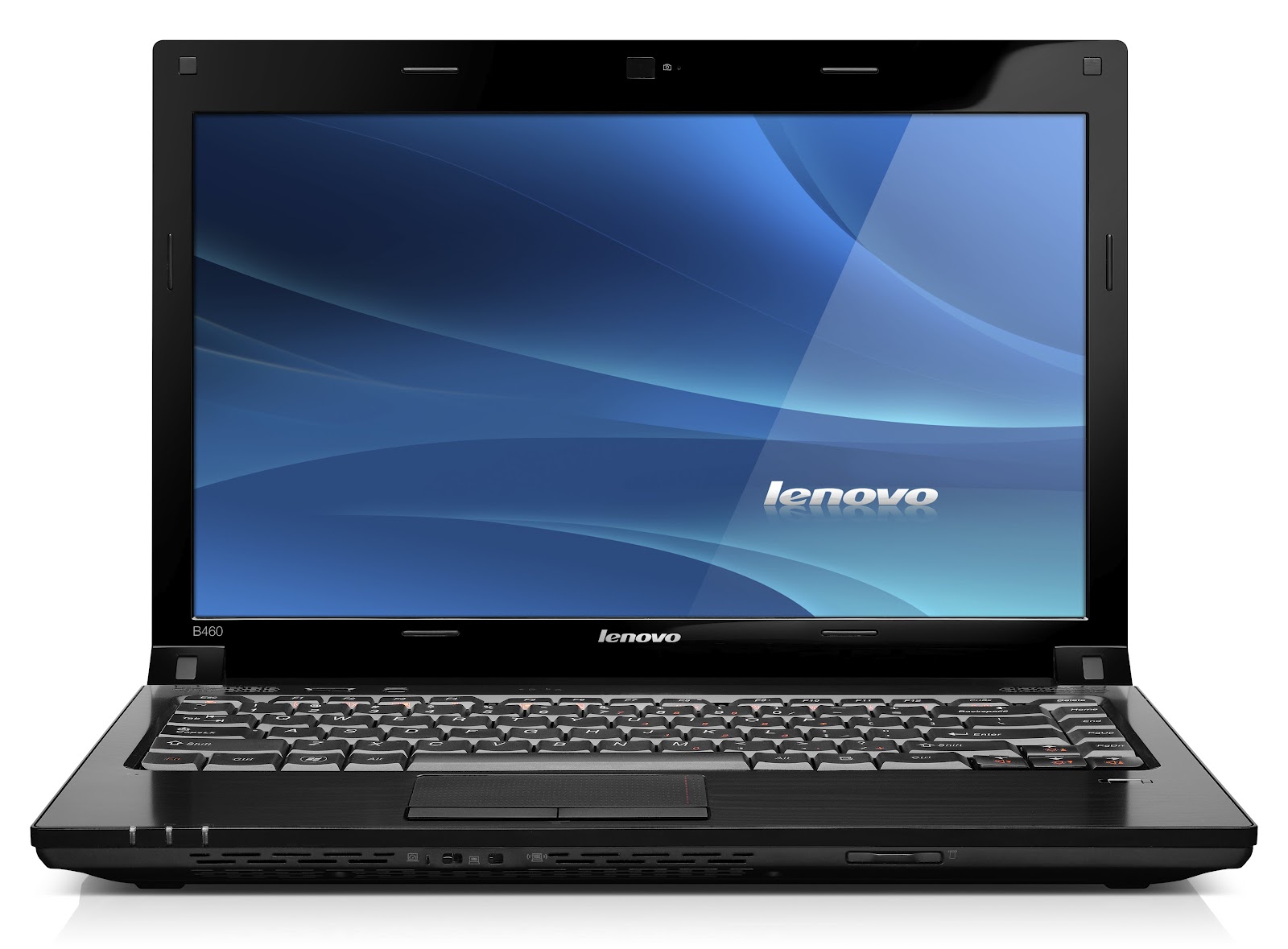
Lenovo said it will try to win even more U.S. small business customers by selling its laptops at the computer retailer's stores.
By Ben Ames, IDG News Feb 21, 2007 10:00 pm
Just two weeks after expanding its relationship with Best Buy Co. Inc., Lenovo Group Ltd. said Wednesday it will try to win even more U.S. small business customers by selling its notebook PCs at Circuit City Stores Inc.'s retail shops.
In both deals, customers will be able to buy Lenovo's ThinkPad T60 widescreen and Lenovo N100 notebook PCs. Circuit City will also sell extra variations of those models in its stores, and the C200 notebook over its Web site and the phone.
The move makes Lenovo notebooks available to shoppers at Circuit City's 700 U.S. stores and Best Buy's 300 "Best Buy for Business" stores. The deal could reach even more consumers in 2008, when Best Buy plans to build 95 new stores in the U.S.
Lenovo made the move because it sees a trend of more small business users purchasing their PCs at retail outlets instead of channels or online, according to a statement from Steve Mungall, Lenovo's vice president for worldwide and Americas channels.
If it succeeds, the plan could help Lenovo return to profit after several weak quarters. The company relies strongly on revenue from China and Europe, while sales in the Americas have declined with a slump in enterprise demand. The company was also shaken earlier this month by the sale of 300 million Lenovo shares by IBM Corp., its second-biggest shareholder and the original owner of Lenovo's ThinkPad PC line.
However, while Lenovo is making a wise move in using retail stores to reach small business buyers, it will face new challenges, one analyst said. Since retail stores attract a full spectrum of buyers, Lenovo must improve its marketing and product features to succeed.
"Retail is a blunt sword to capture those customers as opposed to the sharp edge they are normally used to. Being in stores like Best Buy, Circuit City and Office Depot means they need to be priced competitively against the more consumer-focused offerings on the shelf," said Stephen Baker, vice president of industry analysis for the NPD Group.
To succeed with this strategy, Lenovo will have to sell PCs designed for both consumers and small businesses, instead of the business-focused notebooks they have now.
"Bottom line is they are entering a very tough segment with products that are trying to focus narrowly in a wide atmosphere. I suspect that they will be severely challenged to profitably expand their business to the customers they are interested in with this channel strategy," Baker said.
In the meantime, Lenovo is sticking with its business focus. The company advertises the T60 as the lightest 15.4-inch widescreen notebook available from the top five vendors, with a weight of 5.1 pounds (2.3 kilograms). And Lenovo pitches the N100 to small business customers who want improved Wi-Fi for greater range and faster speeds in wireless connectivity. For Circuit City sales, both models come preloaded with Microsoft Corp.'s Windows Vista Home Basic or Premium OS, while the online version of the T60 uses Vista Business.
http://www.pcworld.com/article/129248/lenovo_to_sell_thinkpads_in_circuit_city_stores.html

A free account from beloved file-sharing and -storage service Dropbox nets you 2GB of space. Want to boost that to 7GB? You can, and it won't cost you a dime extra.
See, Dropbox is beta-testing a new desktop client that can automatically upload photos and videos to your account. If you're willing to take part in the test, you can get as much as 5GB of extra storage--in 500MB increments.
To get started, just download and install the latest version of the Dropbox beta (currently 1.3.12). (If you're already running the software, it might be a good idea to back up everything in your Dropbox folder first.)
Next, plug in your camera, smartphone, or memory card--anything containing photos or videos. Dropbox should automatically import them into a new Camera Uploads folder and sync them with your account.
Bam! You immediately get an extra 500MB of storage.
From then on, for every 500MB of photos and videos that Dropbox automatically uploads, you get an additional 500MB of permanent space in your account--up to 5GB, maximum.
Wait, what good is that if the extra space is already filled (with the photos and videos)? Well, part of the good is that you have an automated and easy backup of your important media.
However, you can also delete everything if you decide you're not interested in that feature--but the added extra space will remain. In other words, by investing a little time as a beta tester, you get the reward of more Dropbox storage. Sounds like a good trade to me!
Add USB Charging Ports to Any AC Outlet
Most modern smartphones, tablets, MP3 players, and other gadgets rely on USB-based chargers. Some of these come with their own AC wall adapters, while others include nothing more than a USB cable--meaning you have to plug them into your PC to get them charged. (I'm thinking in particular of Amazon's entry-level Kindle.)
In both cases, charging gets to be a hassle. You've either got bulky, unattractive AC adapters cluttering up your outlets, or you're leaving your PC running 24/7 just to pull charger duty.
That's why my new favorite item is the RCA USB Wall Plate Charger. A "Best of Innovations" award winner at this year's Consumer Electronics Show, the Wall Plate Charger is definitely an idea whose time has come.
Unlike some similar USB outlets I've seen, this one requires no wiring. That's because it doesn't take the place of an existing AC outlet, but rather plugs into one. (It's literally a plug-and-play solution.)
The Wall Plate Charger gives you one AC socket and two USB ports--the latter able to charge two smartphone-size devices simultaneously. You can also plug a tablet into the 2.1-amp lower port, which supplies enough juice to charge those larger batteries.
I just picked up one of these, and it's terrific. I've used it to charge an iPad and iPod Touch at the same time, and it worked like a charm. And although you still have wires wending from your wall, at least you're rid of those unsightly wall-wart adapters.
The RCA USB Wall Plate Charger has a list price of $19.99, but Lowe's currently sells them for $15 (plus sales tax, natch). Definitely a worthwhile buy, in my humble opinion.
If you've got a hassle that needs solving, send it my way. I can't promise a response, but I'll definitely read every e-mail I get--and do my best to address at least some of them in the PCWorld Hassle-Free PC blog. My 411: hasslefree@pcworld.com. You can also sign up to have the Hassle-Free PC newsletter e-mailed to you each week.
source:http://www.pcworld.com/article/249500/useful_stuff_plugin_usb_charging_port_extra_dropbox_storage.html

One third of all all-in-on PC sales were claimed by Apple for the iMac range. The numbers are from the third quarter of 2011. In second place was Lenovo with 22.7 percent of the share.
The reason Lenovo did well was due to strong sales in China where its all-in-one PC range has taken off. HP took third place with 21.4 percent of the sales.
Research indicates that in 2014 there will be over 23 million sales of all-in-one PCs which are typically large screen devices with +20 inch sized screens.
SOURCE:http://www.gadgetvenue.com/imac-range-claims-a-third-of-all-in-one-pc-sales-for-q3-2011-01052839/

Logitech is releasing a new mouse called the Logitech Cube. The device looks like a small box and fits in the palm of your hand. What makes it unique is that the top side of it is a touch sensitive panel. When picking up the Cube it jumps in to presentation mode and allows you to control a presentation from the palm of your hand.
While in presentation mode the touch sensitive panel can be used to jump forward and backwards between frames. To do that it requires you flip it upside-down when going backwards and flip it back the other way to go forwards between slides. Logitech is also making a plugin available that allows for smoother scrolling.
The device is powered by a Li-Ion battery. To charge it you can connect it to any powered USB port meaning that it can be charged from a laptop for example. Next to the USB port it also has a physical power switch to shut it down while transporting.
Logitech Cube comes with a WiFi USB dongle that allows it to work up to 25 meters away which is generally more than enough for a presentation.
Price wise, it costs $69.99 and is available for pre-order now.
SOURCE:http://www.gadgetvenue.com/logitech-cube-mouse-doubles-as-a-wireless-presentation-controller-01051349/

Vizio has confirmed rumours by announcing that it is launching five new PCs. The launch date for them is expected to be sometime in the Spring of this year.
All five models run the Windows 7 operating system. Other than that, the details are a little sparse at the moment although Vizio has commented that they will “turn the PC market upside down and accomodate the entertainment needs and wants demanded by consumers”.
Although the specifics are not known, expect hardware that provides good HD video and high quality audio from what Vizio have commented on.
We'll have more information as Vizio releases it.
SOURCE:http://www.gadgetvenue.com/five-new-personal-computers-from-vizio-announced-01092714/